Solitaire Town Tycoon
Casual Skill GamesCard
4.61.26K Reviews
- Version
- 13.9.0
- Installs
- 100.00K
- Age Rating
- Mature 17+
Screenshots
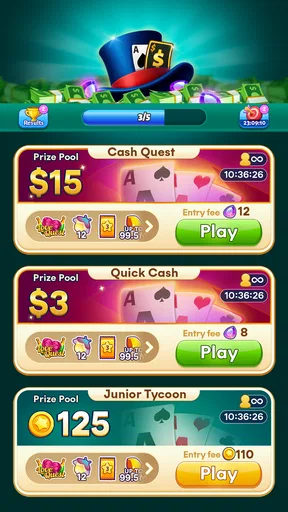
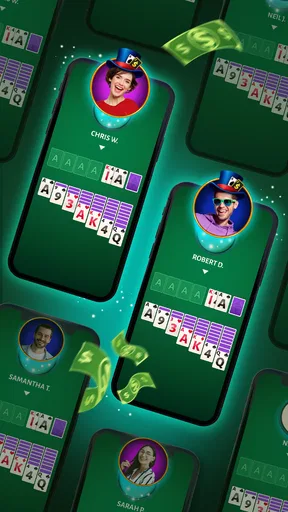
Our Review of Solitaire Town Tycoon
 Analysis by Appyee
I approached Solitaire Town Tycoon as a quick card game for the moments when I want something familiar without committing to a long session. It is a free solitaire title from Casual Skill Games, aimed at mature players and built around the appeal of traditional solitaire with the possibility of earning real rewards. That combination makes it more than a simple offline-style card pastime, but it also means I pay closer attention to the way progress, rewards, and purchases fit together.
My first impression was that the game is easiest to understand if I treat it as two things at once: a nostalgic solitaire experience and a reward-focused mobile game. The cards provide the recognizable foundation, while the surrounding progression gives each completed round more importance than simply clearing a deck. I would recommend trying it with modest expectations at first. The strongest reason to install it is the familiar card format, not the promise of guaranteed earnings.
The game has reached over 100 thousand installs and holds a 4.6 average from roughly 6 thousand ratings, which suggests that many players find the basic experience appealing. It is available at no upfront cost, although optional purchases range from $0.99 to $199.99 per item. That wide purchase range is worth keeping in mind before I begin, especially if I am downloading it mainly because of the reward angle.
Getting comfortable with the solitaire experience
I find it helps to approach the card table as a small puzzle rather than a race toward a reward. In this section, I’ll focus on the choices that make a first round feel understandable, including how to use each move to learn more about the board. That way, a completed game feels like a genuine success even before you decide whether the extra progression suits you.
What I expect before starting
Solitaire Town Tycoon belongs to the card-game category, so the central activity is immediately recognizable to anyone who has played classic solitaire on a phone or computer. I do not need to learn a complicated control scheme before making a first move. The useful mindset is to focus on the board in front of me, identify legal card movements, and avoid rushing simply because the game is presented in a modern mobile format.
The nostalgic design idea is important here. A player who wants a quiet card puzzle may enjoy the familiar rhythm of revealing hidden cards, arranging sequences, and looking for the move that opens the board. Someone expecting a deep strategy game, a large multiplayer community, or a long narrative campaign may find the experience narrower than expected. This is fundamentally a solitaire session with a reward-oriented layer around it.
Because the content rating is Mature 17+, I would not treat it as a family card game for younger children. That rating is also a reminder to read the purchase and reward screens carefully rather than handing the phone to a child for unsupervised play. For an adult player, the more practical question is whether the reward structure adds motivation or distracts from the cards.
What the first setup feels like
After installing the game, I would begin by taking a slow look at the opening screen instead of tapping through every prompt automatically. In reward-based games, the first screens often establish how a round begins, what counts as progress, and where optional offers appear. I find it useful to identify the normal play button first and leave any purchase-related choice alone until I understand the basic loop.
The current version is 13.9.0, and the game requires at least iOS or Android version 12. That makes checking the operating system a sensible step before installation. If the phone is older or has limited free space, I would confirm compatibility first rather than assuming that a familiar card game will run on every device.
I also recommend deciding on a personal spending rule before the first session. Since the game is free to start but includes optional items with a substantial upper price, I would play the opening rounds without buying anything. That gives me a better sense of whether the solitaire itself is enjoyable and prevents the excitement of a possible reward from making the first decision for me.
How I reach the first meaningful success
For a first-time player, the most reassuring goal is not to chase the largest possible reward. It is to complete an early solitaire round while understanding why each move was made. I start by scanning for exposed cards that can reveal something underneath them. Opening a hidden card is usually more valuable than making a visually tidy move that leaves the important part of the board unchanged.
My practical routine is simple. I look for moves that uncover a face-down card, preserve useful empty spaces, and avoid breaking a sequence unless doing so creates a clear advantage. When several moves appear legal, I choose the one that gives me more information about the board. That approach is especially helpful on a small phone screen, where repeatedly undoing careless moves can make a short session feel unnecessarily confusing.
I also keep the reward objective in the background during the first few games. If I stare at the possible payout or progress indicator after every move, I am more likely to play emotionally. Solitaire rewards patience: the best move is often the one that improves future options rather than the one that immediately changes the score. Once I finish a round, I can then inspect how the game recorded the result and what the next step involves.
The best first milestone is understanding the board well enough to finish a round without spending money. That gives me a reliable baseline for judging the game. If I enjoy the card play at that point, the additional progression may be worthwhile. If I do not, no reward screen will fix the basic mismatch.
Small decisions that make a difference
One useful habit is to delay moving a card to a foundation or completed area when that move might remove flexibility from the tableau. In classic solitaire, a card can sometimes be more useful where it is because it helps expose or organize another card. I apply the same caution here rather than automatically sending every available card away.
Another practical tip is to play in short, focused sessions. A quick round during a commute or while waiting can suit the format, but playing while distracted makes it easier to miss a legal move or misunderstand a reward condition. I would rather finish one deliberate round than begin several games while switching between messages and other apps.
I also pay attention to the difference between progress earned through play and progress associated with an optional offer. Those may appear close together in a mobile interface, but they are not the same decision. Before confirming anything, I read the wording on the screen and check whether I am starting a normal round, claiming a reward, or opening a purchase flow.
Where new players can become confused
The parts around the cards can be less familiar than solitaire itself, so I’d pause whenever a screen seems to combine progress, a reward, and an optional offer. I’ll explain the distinctions I watch for and how I keep those choices separate from ordinary play. A little care at these moments makes it easier to decide whether to continue without feeling rushed.
Rewards are not the same as guaranteed income
The phrase “real rewards” can create an expectation that every successful round produces dependable cash. I would not approach the game that way. Reward-based card games can make completion feel more meaningful, but the presence of rewards does not turn a casual session into predictable income. I treat any reward as a possible benefit of playing, not as a reason to spend money or plan a budget around the app.
This distinction matters because the game is free to download while also offering in-app purchases. A player who is comfortable with ordinary solitaire may be surprised when the reward layer introduces decisions that are not part of the traditional card game. My advice is to separate entertainment value from financial expectations: first decide whether the solitaire is fun, then decide whether the reward system adds anything useful.
Why the mature rating deserves attention
The Mature 17+ rating is easy to overlook when the central activity is a familiar card game. I would still take it seriously. The age rating makes the title a poor choice for a child’s casual device, and it supports being careful around reward language and purchase prompts. If I share a phone or tablet with younger family members, I would avoid leaving the game open where they can continue without supervision.
For adult players, this does not automatically make the game unsuitable. It simply changes how I use it. I keep purchase decisions deliberate, avoid treating the app as a source of financial security, and stop playing if the reward pressure becomes more noticeable than the card puzzle itself.
How it compares with ordinary solitaire
A standard solitaire app is usually the better choice when I want a clean, uncomplicated puzzle with no reward-focused layer. It may feel more relaxing because the only objective is to arrange and clear the cards. Solitaire Town Tycoon is more appealing when I want the familiar format to connect with a sense of progression or possible rewards.
The trade-off is attention. A plain solitaire game lets me concentrate almost entirely on the board. Here, I need to understand the surrounding progression and distinguish ordinary play from optional spending. Players who enjoy goals beyond the puzzle may appreciate that extra context, while players seeking a quiet, distraction-free card table may prefer a simpler alternative.
It also differs from competitive card games. If I want direct matches, social interaction, or a clear head-to-head ranking system, this would not be my first choice based on its solitaire identity. Its strength is the individual puzzle loop, not the tension of competing against another person in real time.
Who should skip it
I would skip this game if I dislike reward mechanics, feel tempted by large purchase options, or only want an entirely traditional solitaire experience. I would also avoid it if my phone does not meet the minimum operating-system requirement, since a familiar card format is not enough reason to replace a device or work around compatibility issues.
It is less suitable for anyone looking for a dependable way to make money. The right reason to try it is that I enjoy solitaire and am curious about the added reward structure. If the reward promise is the only thing holding my interest, a conventional free card game may be a healthier and more satisfying alternative.
Who is likely to enjoy it
I think the best audience is an adult who already likes solitaire but wants a little more motivation to return to the table. The game can fit into short breaks, evening downtime, or a routine in which completing a round feels better when it contributes to a broader sense of progress. It is also a reasonable option for someone who prefers solo play and does not need a story or multiplayer competition.
A realistic everyday scenario would be waiting for an appointment with ten minutes to spare. I could open the game, play one careful round, and close it without needing a long campaign or a group of opponents. The key is to decide in advance that the session is entertainment, not a spending opportunity. That boundary keeps the game useful for downtime instead of turning a short wait into an impulsive purchase session.
What I would do after the first round
Once I have completed a meaningful round, I would review the result and identify what actually made the game enjoyable. Was it the familiar card arrangement, the satisfaction of revealing hidden cards, or the possibility of a reward? The answer helps me decide whether to continue. If the solitaire was fun on its own, I can explore the next progression step gradually.
I would not jump straight into the most expensive option simply because it appears after a successful game. The available purchase range reaches from $0.99 to $199.99 per item, so the sensible next step is to remain on the free path until I understand what each offer does and whether it improves my experience. A low-cost purchase is still a purchase, not a requirement for learning the game.
My preferred workflow is to play several short sessions, notice whether the board remains engaging, and only then consider optional content. I also keep track of how much time I am spending compared with how much enjoyment I receive. That is a more useful measure than focusing only on the reward language.
Developer, maturity, and overall fit
Casual Skill Games has positioned this title around an accessible card format rather than a complex genre experiment. That makes the game easy to approach, but it also means the quality of the experience depends heavily on whether the reward layer feels comfortable to me. The underlying solitaire appeal is strongest when the interface stays out of the way and lets the board remain the main focus.
The mature audience positioning narrows its use as a general family game, yet it makes sense for adults who are comfortable reading terms and making careful decisions around optional purchases. I would describe the game as approachable rather than universally suitable: easy to begin, but best enjoyed by players who understand what kind of mobile reward experience they are entering.
My recommendation after using it
Solitaire Town Tycoon is worth trying if I want familiar solitaire with an added reward-oriented reason to keep playing. Its free entry point makes testing the basic experience straightforward, and the strong average rating indicates that it has found an audience. I like that a first-time player can begin with ordinary card decisions instead of learning a complicated system.
My recommendation comes with a clear condition: I would install it for the solitaire, then evaluate the rewards separately. I would not spend money during the first session, and I would not interpret possible rewards as guaranteed earnings. That approach lets me enjoy the game on its strongest ground while avoiding the most obvious source of disappointment.
In the end, this is a better fit for an adult who wants a casual solo card game with extra progression than for someone seeking pure, minimalist solitaire. If that description matches what I want, the game offers a reassuring path from installation to a first completed round and then gives me room to decide how deeply I want to engage. If I prefer zero purchase pressure or a completely traditional card table, I would choose a simpler solitaire alternative instead.
My final view is positive but measured: start free, learn the board, complete a few deliberate rounds, and judge the experience by the quality of the card play before paying attention to anything else.
Verdict
Strengths of Solitaire Town Tycoon
- Relaxing solitaire gameplay suitable for short sessions.
- Tycoon progression adds goals beyond simply winning card games.
- Simple controls make it easy for casual players to pick up.
- Bright visuals and cheerful presentation create a pleasant atmosphere.
- Playable at your own pace without requiring fast reactions.
Limitations of Solitaire Town Tycoon
- Progress can feel repetitive after extended play sessions.
- Some upgrades may require considerable time or in-game currency.
- Frequent rewards and prompts can interrupt the card gameplay.
- Limited challenge variety may reduce long-term appeal for experts.
- Performance and loading times may vary across older devices.
Similar Picks in This Category
View All
Solitaire - Classic Card Games
MobilityWare4.6

UNO!™
Mattel163 Limited4.3

Spider Solitaire: Card Games
MobilityWare4.6

Solitaire.com - Classic Cards
Tripledot Studios Limited4.7

Plants vs. Zombies™ Heroes
ELECTRONIC ARTS4.1

Hearthstone
Blizzard Entertainment, Inc.4.1
Frequently Asked Questions
What is Solitaire Town Tycoon?
Solitaire Town Tycoon is a casual card game that combines classic solitaire gameplay with town-building and tycoon elements. You complete solitaire levels to earn rewards, then use those resources to construct, upgrade, and decorate your town. The progression system gives the traditional card format a broader purpose, making it suitable for players who enjoy both relaxing puzzles and light management gameplay.
Is Solitaire Town Tycoon free to download and play?
Yes, Solitaire Town Tycoon can generally be downloaded and played for free, although it may include optional in-app purchases. These purchases can provide extra coins, boosters, lives, or other convenience items, but they are not necessarily required to experience the main gameplay. Players should also check the store listing for current pricing, supported devices, and any regional differences.
Does Solitaire Town Tycoon require an internet connection?
An internet connection may be needed for certain features, such as loading advertisements, synchronizing progress, receiving events, processing purchases, or connecting to online services. Some solitaire rounds may work while offline, but availability can vary according to the device and game version. For the most reliable experience, launch the game online and allow it to update before playing without a connection.
Are there advertisements or in-app purchases in Solitaire Town Tycoon?
Solitaire Town Tycoon may contain advertisements and optional in-app purchases. Ads can appear between levels or when you choose to claim bonus rewards, while purchases may offer currency, boosters, or faster progression. The game can still be enjoyed without spending money, although progress may feel slower at difficult stages. Parents should review purchase settings if children use the device.
Is Solitaire Town Tycoon suitable for all ages?
Solitaire Town Tycoon is generally easy to understand because its main card mechanics are based on familiar solitaire rules. However, age suitability depends on the content rating, advertising, and purchase options shown in the official app store. Younger players may need supervision, particularly where optional purchases or third-party advertisements are available. The game is best suited to users who enjoy casual, non-action gameplay.
Play our best games!


